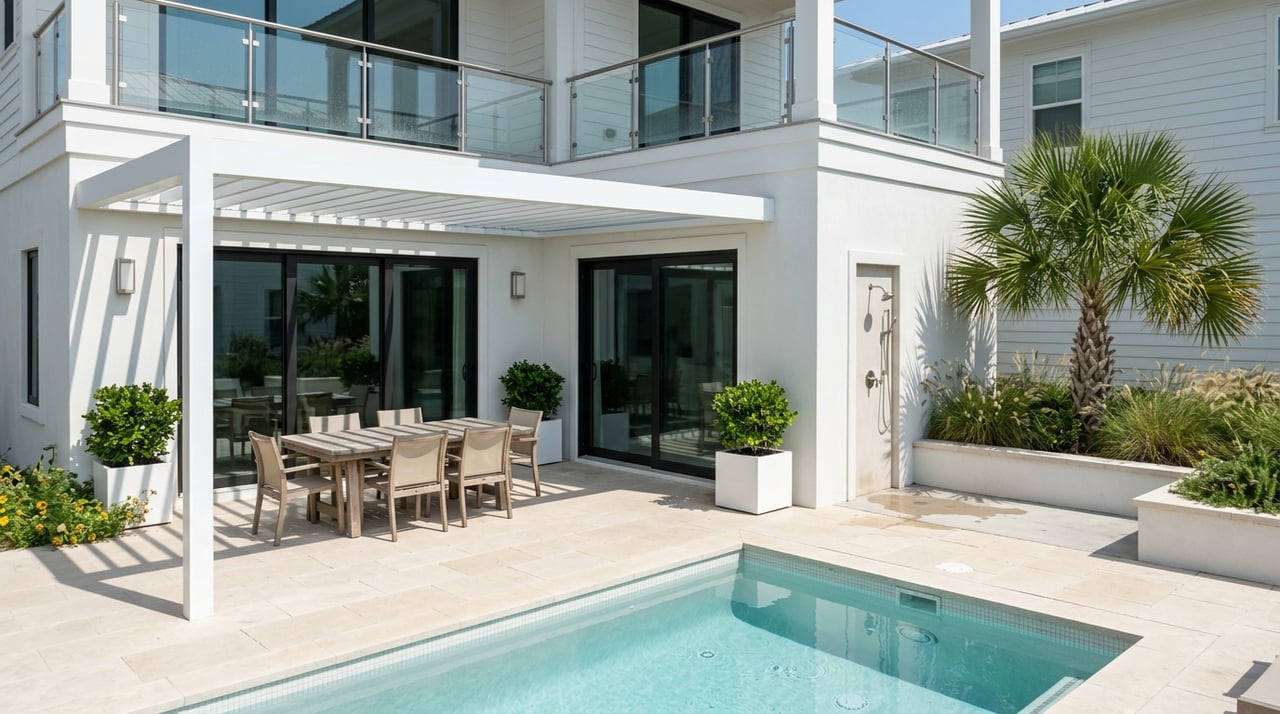
Are you thinking about buying a vacation rental in Inlet Beach and wondering if the numbers, location, and guest demand really support the investment? That is a smart question, especially in a coastal market where one street, one amenity, or one access point can change performance in a meaningful way. If you want to invest with more clarity, this guide will help you understand what makes Inlet Beach appealing, what guests tend to want, and what local rules you need to factor in before you buy. Let’s dive in.
Why Inlet Beach Stands Out
Inlet Beach is best understood as an east 30A beach market in Walton County, not just a generic Gulf Coast vacation spot. It is the first of South Walton’s 16 beach neighborhoods when approaching from the east, and it offers a mix of beach cottages, townhomes, condominiums, villas, and larger homes.
That positioning matters because many guests are not simply booking a place near the water. They are choosing a specific 30A experience, and Inlet Beach gives them access to the beach lifestyle while staying close to popular nearby areas like Rosemary Beach, Seacrest, and Alys Beach.
Another key advantage is access. Inlet Beach has the area’s largest regional beach access, with a boardwalk, lifeguards, restrooms, and accessible parking, and the area benefits from the Highway 98 and 30A underpass that allows beach access without crossing traffic.
For vacation renters, convenience can shape the whole stay. Homes that make it easier to walk to the beach, dining, shopping, and nearby town centers are often easier to market because they reduce the everyday friction that can come with a beach trip.
What the Inlet Beach Rental Market Looks Like
Public rental data shows that Inlet Beach is primarily a whole-home market. In the current AirROI dataset, 100% of active supply is entire-home or apartment inventory, 91.7% is houses, 79.0% of listings have three or more bedrooms, and 75.2% sleep eight or more guests.
That tells you something important as an investor. Inlet Beach is generally built around family travel, friend groups, and multi-generational stays rather than small, single-room accommodations.
The current public snapshot also gives a useful benchmark for performance. AirROI reports about 109 active listings, 41.0% occupancy, an average nightly rate of $578, RevPAR of about $250, and average annual revenue of $63,306.
Those numbers can help you frame the market, but they should never be treated as a guarantee. Performance can vary widely based on bedroom count, walkability, access, amenities, management quality, and how often the owner blocks the calendar.
How to Evaluate Rental Projections
When you review rental projections, it helps to look at more than one metric. Occupancy tells you how often a home is booked, ADR shows the average rate on booked nights, and RevPAR blends rate and occupancy together so you can see demand more clearly.
In a market like Inlet Beach, no single number tells the full story. A home can have a high nightly rate but inconsistent booking, while another may book more often at a lower rate and still produce healthy revenue.
The smarter move is to compare like-for-like properties. Focus on homes with a similar bedroom count, a similar location relative to beach access, a similar amenity package, and a similar calendar strategy.
That is especially important in a luxury coastal market, where the range can be wide. Public listing examples include very large beachfront homes with private pools, luxury multi-bedroom houses, and smaller homes that stand out because they offer bikes, golf carts, bunk rooms, or a strong beach-access story.
Best Property Types for Inlet Beach Investors
If you are looking for a property with strong vacation-rental appeal, the public data points to one clear direction: larger private homes. Inlet Beach performs most naturally as a furnished, multi-bedroom, whole-home rental that can comfortably host a group.
That does not mean every large home is a strong investment. The best fit is usually a property that combines the right layout with practical guest convenience.
Features that often match this market well include:
- Three or more bedrooms
- Space for larger groups
- Easy beach access
- Walkability to dining and shopping
- Private outdoor living areas
- Parking that works for family travel
Because this is a low-rise, walkable area, layout can be a differentiator too. In the current public dataset, elevator access is one of the amenities most associated with revenue, which makes sense for taller homes serving multi-generational groups or guests who value easier movement between floors.
Amenities That Can Help a Home Compete
Some amenities are basic expectations in this market. Public listings data shows that air conditioning, a kitchen, free parking, wifi, a refrigerator, smoke alarm, coffee maker, dishwasher, TV, and washer are common essentials.
If a property misses too many of those basics, it may feel incomplete to guests. In a premium 30A setting, the baseline matters.
Beyond the essentials, certain features can make a property more compelling. Higher-value differentiators in public data include:
- Elevator
- Patio or balcony
- Fire pit
- Sun loungers
- Pet-friendly setup
- Private pool
- Golf cart
- Bikes
- Bunk-friendly sleeping layouts
The strongest listings tend to pair a clear location advantage with a thoughtful amenity package. In other words, a beautiful home still needs to make the beach stay feel easy, comfortable, and memorable.
Location Strategy Matters in Inlet Beach
Inlet Beach is not a market where broad proximity tells you enough. South Walton has more than 50 beach and bay access points across the destination, so buyers should think very specifically about access rather than assume every nearby address performs the same way.
That is why micro-location matters so much here. Homes closer to the 98 and 30A gateway, the underpass, the regional beach access, and the retail and dining cluster at 30Avenue may have a marketing advantage because guests can move more easily between the house, the sand, and nearby activities.
This does not mean other locations cannot perform well. It simply means that in Inlet Beach, convenience is part of the product, and the easier a stay feels, the easier it can be to attract renters.
Seasonality and Booking Patterns
Inlet Beach has clear seasonality, but it is not only a summer market. Visit South Walton identifies summer as the high season, while late fall, winter, and early or late spring often bring lower rates and smaller crowds.
The seasonal picture is still broad enough to matter for investors. January and February are typically mild, spring warms up, July and August are the hottest beach months, and November and December have become increasingly popular with vacationers.
Public rental data supports that pattern. AirROI shows July as the strongest month, January as the softest, an average booking lead time of about 48 days, and an average stay of 5.1 nights.
That gives you a practical planning lens. If you buy in Inlet Beach, you should expect a strong summer focus, but you should also think about shoulder-season appeal, holiday demand, and pricing strategy outside peak beach months.
Rules and Taxes to Know Before You Buy
Before you purchase a vacation rental in Inlet Beach, it is important to understand the local framework. Walton County requires a short-term vacation rental certificate before a residential unit can be rented on a short-term basis, and each dwelling unit needs its own annual certificate.
The county also requires a locally available responsible party who can respond 24 hours a day, 7 days a week and, if needed, reach the property within one hour. Rental terms must also address occupancy, noise, trash, and emergency evacuation.
There are life-safety standards as well. County requirements include items such as smoke detection, fire extinguishers, and pool safety, along with additional notice and lighting rules for units in the wildlife protection zone.
For Gulf-facing properties, sea turtle nesting season is a real operational consideration from May through October. Owners need to pay attention to lighting use and guest communication, because exterior lighting and beach-facing behavior can affect compliance during nesting season.
Taxes also affect your underwriting. Florida imposes a 6% state sales tax on rentals, and Walton County has a 5% transient rental tax for ZIP code 32461, which includes Inlet Beach.
That means public revenue projections should be viewed as gross operating benchmarks, not net income. Your actual return will depend on taxes, management, maintenance, insurance, owner use, and how your home compares with competing properties.
A Smarter Way to Invest in Inlet Beach
If you are serious about investing in Inlet Beach vacation rentals, the goal is not just to buy a pretty house near the water. The goal is to buy a property that fits how this specific market books.
That usually means looking closely at access, walkability, bedroom count, amenity fit, and how the home serves larger groups. It also means understanding county rules early, so there are no surprises after closing.
In a market this nuanced, the best opportunities are often the ones where lifestyle appeal and investment logic meet. A home that feels effortless for guests, aligns with local demand, and is positioned well within the east 30A landscape can offer a much stronger long-term ownership experience.
If you want expert help identifying vacation-rental properties in Inlet Beach that fit your goals, connect with Elizabeth Boswell for local insight, thoughtful guidance, and concierge-level support throughout your search.
FAQs
What makes Inlet Beach different from other 30A vacation rental markets?
- Inlet Beach stands out for its east 30A location, large regional beach access, underpass connectivity, and close reach to destinations like Rosemary Beach, Seacrest, and Alys Beach.
What property type works best for an Inlet Beach vacation rental investment?
- Public data suggests that multi-bedroom whole homes are the strongest fit, especially properties designed for families, larger groups, and multi-generational stays.
What amenities matter most for Inlet Beach vacation rentals?
- Basic guest expectations include air conditioning, kitchen, parking, wifi, laundry, and standard safety features, while differentiators can include an elevator, pool, bikes, golf cart, patio space, and bunk-friendly layouts.
What are the main short-term rental rules for Inlet Beach owners?
- Walton County requires a short-term vacation rental certificate, a locally available responsible party, and compliance with standards covering occupancy, noise, trash, emergency evacuation, and life-safety items.
How seasonal is the Inlet Beach vacation rental market?
- Summer is the strongest season, July is the peak month in current public data, and slower periods often appear in winter, though November and December have become more popular with visitors.
What taxes should you plan for with an Inlet Beach vacation rental?
- Current state and county sources show a 6% Florida state sales tax on rentals and a 5% Walton County transient rental tax for ZIP code 32461, so projected revenue should be treated as gross, not net.