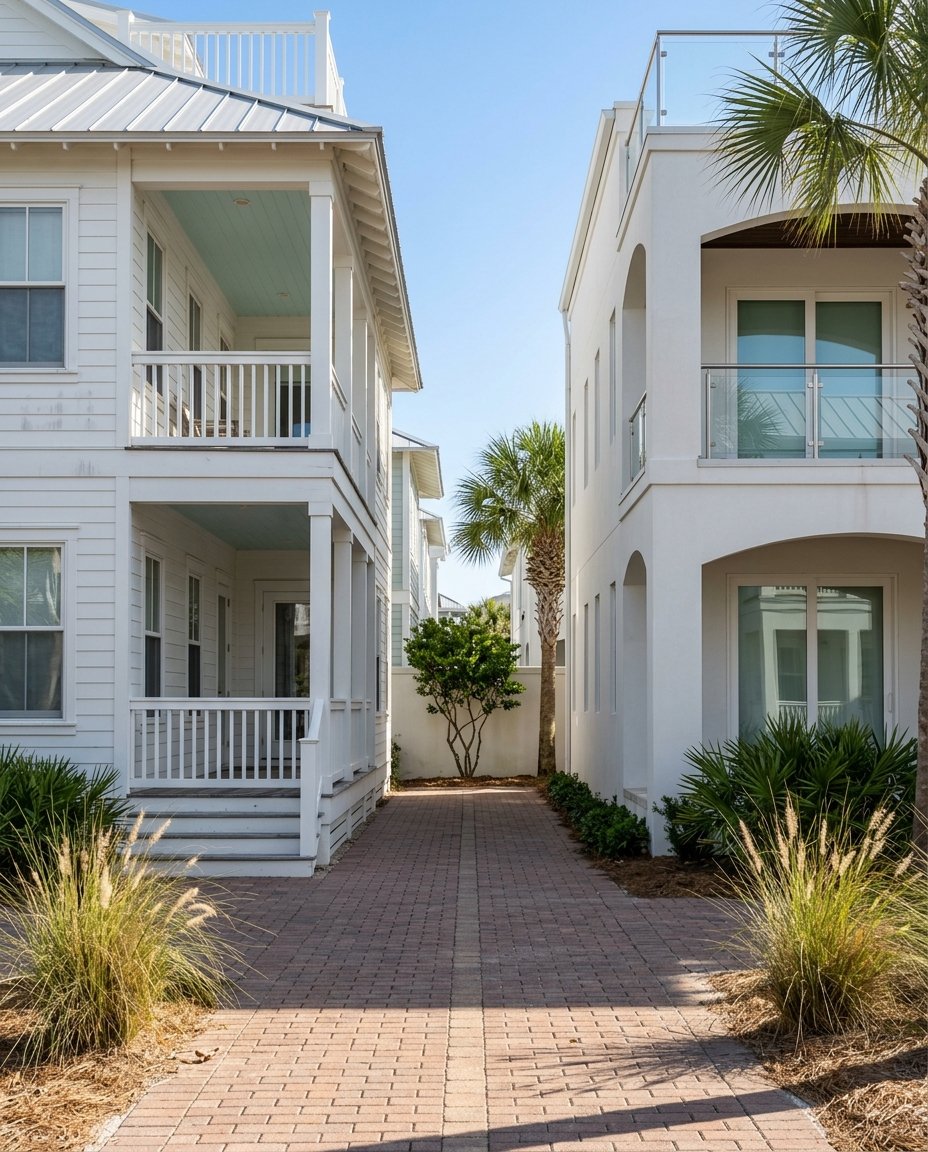
Wondering whether Seaside or WaterColor is the better fit on 30A? You are not alone. These neighboring communities share Gulf access, strong design identity, and a walkable coastal lifestyle, but they live very differently day to day. If you are comparing them for a second home, full-time residence, or vacation-rental purchase, this guide will help you see the real difference in layout, amenities, ownership feel, and everyday rhythm. Let’s dive in.
Seaside vs WaterColor at a glance
The simplest way to compare these two communities is this: Seaside feels like a compact town, while WaterColor feels more like a managed coastal resort community.
Seaside was designed at a smaller, more human scale. Its plan centers around Central Square, with homes, shops, dining, and beach access connected by brick streets and white-sand footpaths. WaterColor sits next door on 499 acres, with a 220-acre dune-lake edge, multiple amenity districts, and a broader network of recreation areas.
That difference shapes almost everything else, from how you move through the neighborhood to how ownership feels over time.
Daily life in Seaside
Walkability is the main feature
If you want to park the car and mostly forget about it, Seaside stands out. The town says shopping and dining are within a five-minute walk of all residences and The Court, and beach access points are spread throughout town.
In practical terms, that means daily life can feel simple and connected. You can move from your home to coffee, dinner, shopping, or the beach without much planning. For many buyers, that easy rhythm is the main draw.
The town core shapes the experience
Central Square is not just a landmark. It helps organize life in Seaside. Because the community is compact, the square, nearby streets, and beach pavilions are woven into everyday movement.
That gives Seaside a strong sense of place. If you are looking for a setting where the town itself is part of the lifestyle, Seaside offers that in a very direct way.
Daily life in WaterColor
More space, more destinations
WaterColor offers a different kind of coastal experience. The community association describes it as 499 acres with nearly half devoted to common and natural areas, plus tree-lined streets, walkways, parks, and separate amenity zones.
That larger footprint creates a more spread-out feel. Instead of one tightly knit core, you have multiple destinations, including the Beach Club, Camp WaterColor, BoatHouse, Tennis Center, and WaterColor Crossing.
Transportation is more structured
Because WaterColor covers more ground, movement works differently here. The community also offers a trolley for point-to-point transportation, which supports the larger layout.
For some buyers, this feels convenient and resort-like. For others, it feels less immediate than Seaside’s short-walk lifestyle. The right fit depends on whether you want compact simplicity or a wider amenity network.
Beach access works differently
Seaside beach access
Seaside organizes beach access around nine pavilions. Coleman Pavilion serves as the central beach access point and includes cabana services. The town also notes that vacation-rental guests receive access to the pavilion on their street, while public access at Coleman Pavilion can be booked through Cabana Man.
This setup reinforces Seaside’s street-by-street character. Your location in town can shape how your beach routine feels, which adds to the neighborhood-specific nature of ownership.
WaterColor beach access
WaterColor’s approach is more club-based. WaterColor Beach Club provides private access to the adjacent beach through a dune crossover and ADA ramp, and the club is not open to the general public.
Camp WaterColor is also reserved for WaterColor residents and WaterColor Inn guests, with wristband access required. If you value more controlled access to amenities, WaterColor may feel more aligned with what you want.
Why the connection matters
One detail worth knowing is that the former Van Ness Butler access between Seaside and WaterColor is no longer public and is owned exclusively by WaterColor. That changes how the communities connect along the beach corridor.
For a buyer, this matters because neighboring on a map does not always mean interchangeable in daily use. Access, movement, and convenience are shaped by each community’s own structure.
Homes and design character
Seaside homes feel more cottage-driven
Seaside’s housing stock leans toward cottages and legacy-style ownership. The town says it has more than 300 homes, shops, restaurants, and galleries, and its history emphasizes inheritable homes, family cottages, and multi-generational ownership.
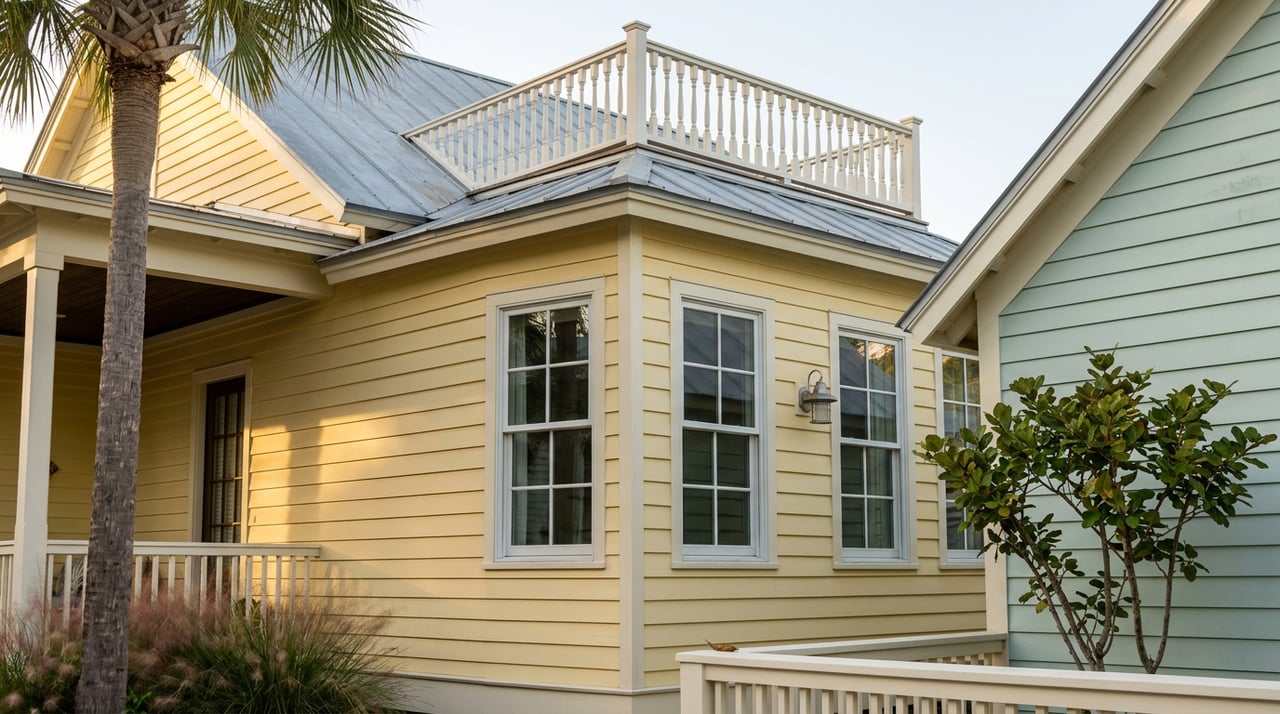
Architecturally, Seaside uses indigenous materials, regional traditions, and front-porch, pedestrian-friendly design. If you are drawn to a home that feels tied to a long-standing town story, Seaside may resonate more strongly.
WaterColor homes follow a more unified design framework
WaterColor has a more formal design-control structure. Its Design Review Board oversees projects that range from landscaping and paint to new construction, and the design guidelines call for elegantly scaled buildings that enhance the natural setting and draw from American Coastal and Florida vernacular traditions.
That tends to create a more standardized visual rhythm across the community. If consistency, design oversight, and a polished community-wide look matter to you, WaterColor offers a more regulated ownership environment.
Ownership experience and HOA feel
Seaside is more street-specific
One of the biggest practical differences is governance. In Seaside, each street is managed by its own HOA, and beach access is determined by location and HOA rules.
That can create a more localized ownership experience. Two homes in Seaside may share the same town identity while still having different practical considerations depending on the street.
WaterColor is more centralized
WaterColor operates with a master association and sub-associations, including the Private Residence Club, Town Center Condominium, and Beachside Condominium. Short-term rentals must register with the HOA, annual owner certification is required, and community rules also address parking, amenity use, and guest conduct.
This creates a more structured experience. Buyers who prefer clear systems and formal standards often see that as a plus, especially if they value predictable community management.
Which community fits your goals?
Choose Seaside if you want a true town feel
Seaside may be the better match if you are looking for:
- A compact, highly walkable town core
- A cottage-forward architectural feel
- A lifestyle shaped by Central Square and neighborhood scale
- Beach access woven directly into daily routines
- A more legacy-oriented ownership atmosphere
This is often the right fit for buyers who care most about character, proximity, and a classic 30A town experience.
Choose WaterColor if you want broader amenities
WaterColor may be the better match if you are looking for:
- A larger community footprint
- More resort-style amenity districts
- Private beach and pool access tied to community rules
- Trolley service and structured transportation options
- A more formal HOA and design-review environment
This can appeal to buyers who want a managed coastal setting with a wider amenity base and more standardized oversight.
What investors and second-home buyers should consider
For vacation-rental and second-home buyers, the key difference is not just style. It is how the ownership model supports your intended use.
In Seaside, ownership can feel more nuanced because access and HOA structure vary by street. In WaterColor, the framework is more centralized, with formal registration requirements for short-term rentals and stricter amenity-access systems.
Neither model is automatically better. The right choice depends on whether you want a more neighborhood-specific experience or a more association-managed one. If your goal is to balance personal enjoyment with rental use, it helps to compare individual properties in the context of each community’s rules and layout.
The final test: town or resort community?
If you are still torn, ask yourself one question: Do you want to feel like you live in a town, or in a managed resort-style coastal community?
Seaside offers the tighter town core, walk-first design, and cottage-rich identity that many buyers picture when they think of classic 30A. WaterColor offers more acreage, more amenity zones, and a more formal ownership structure that can feel polished and predictable.
Both communities are highly recognizable parts of 30A. The best fit comes down to how you want your home to support your daily life, your guests, and your long-term goals.
If you are weighing Seaside against WaterColor, the most helpful next step is to look beyond photos and compare how each community actually lives. Elizabeth Boswell can help you narrow the options, match your goals to the right neighborhood, and guide you through a smooth, concierge-level buying experience on 30A.
FAQs
How is Seaside different from WaterColor for everyday living?
- Seaside is more compact and centered around a walkable town core, while WaterColor is larger, more spread out, and organized around multiple amenity districts.
Which 30A community has more amenities, Seaside or WaterColor?
- WaterColor has a broader resort-style amenity network, including the Beach Club, Camp WaterColor, BoatHouse, Tennis Center, and multiple parks.
Which 30A community feels more walkable, Seaside or WaterColor?
- Seaside is designed for short walks between homes, dining, shopping, and beach access, which gives it the tighter walkable feel.
How does beach access work in Seaside compared with WaterColor?
- Seaside uses nine beach pavilions with access shaped in part by street location, while WaterColor uses a more private, club-based access model for certain amenities.
Which community has a stricter HOA structure, Seaside or WaterColor?
- WaterColor has a more centralized and formal association structure, while Seaside’s ownership experience can vary more by street and HOA.
Is Seaside or WaterColor better for a vacation-rental buyer on 30A?
- The better fit depends on whether you prefer Seaside’s street-specific ownership model or WaterColor’s more centralized community rules and rental registration structure.