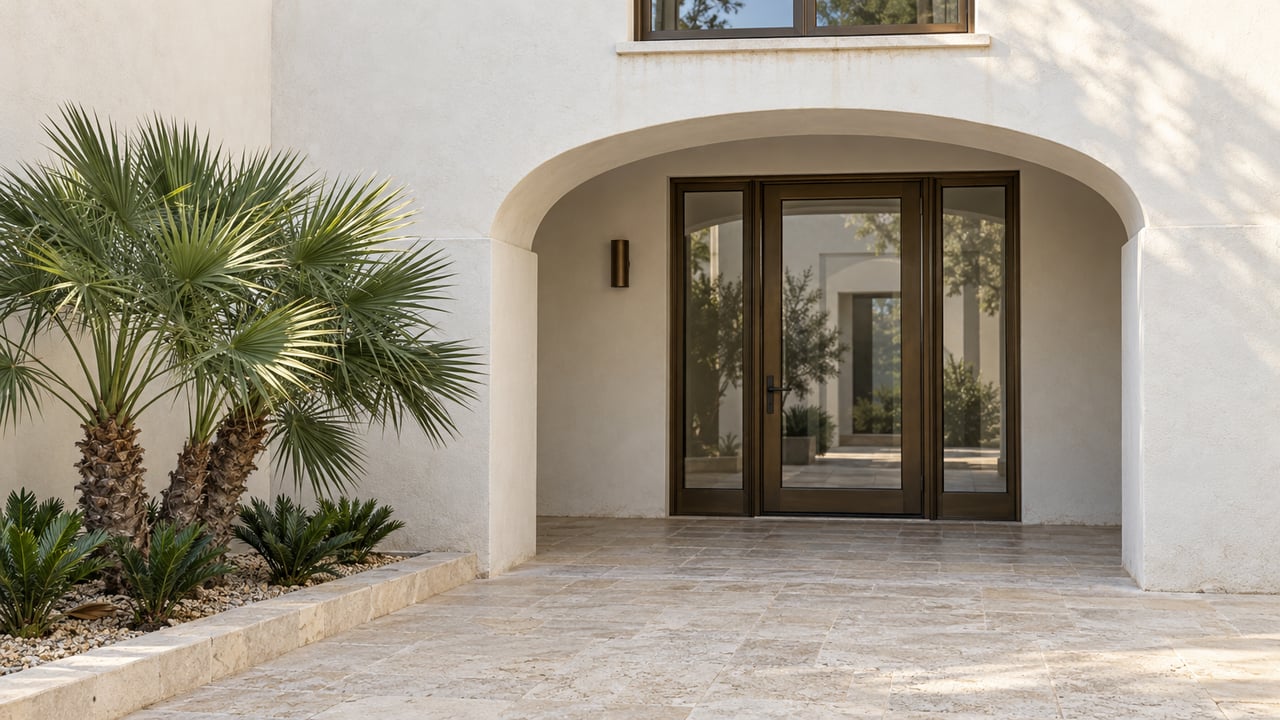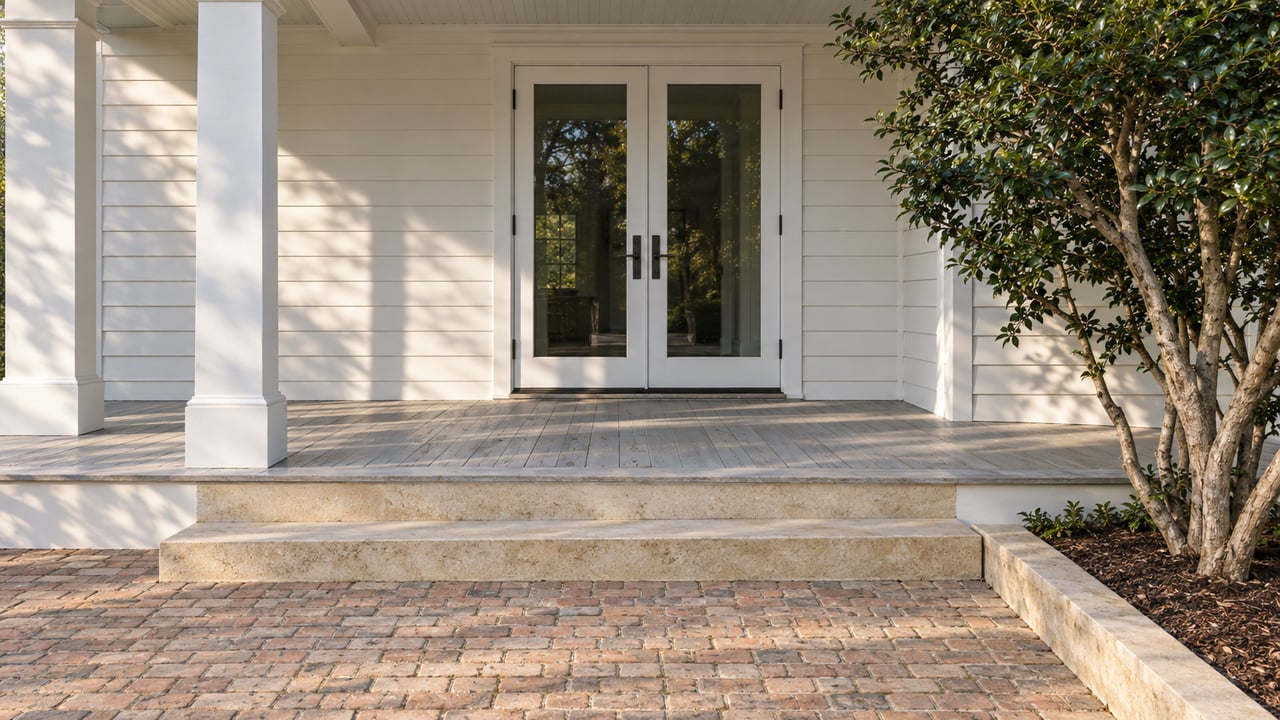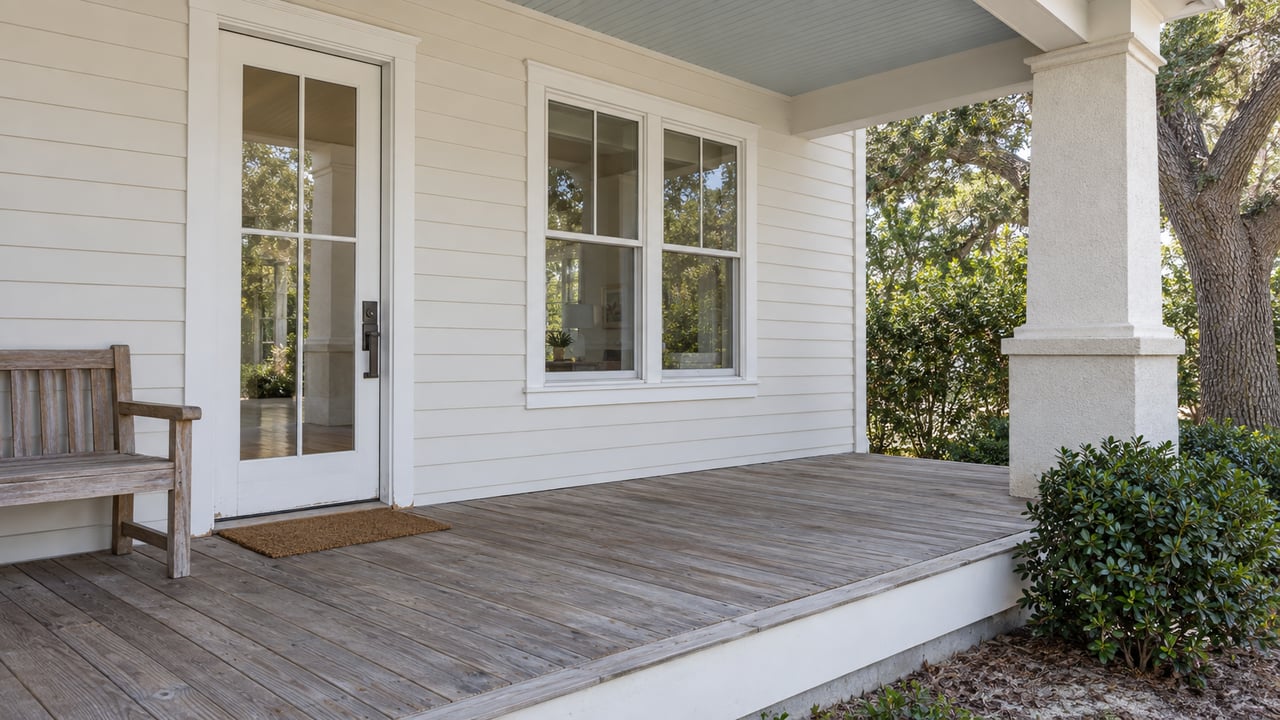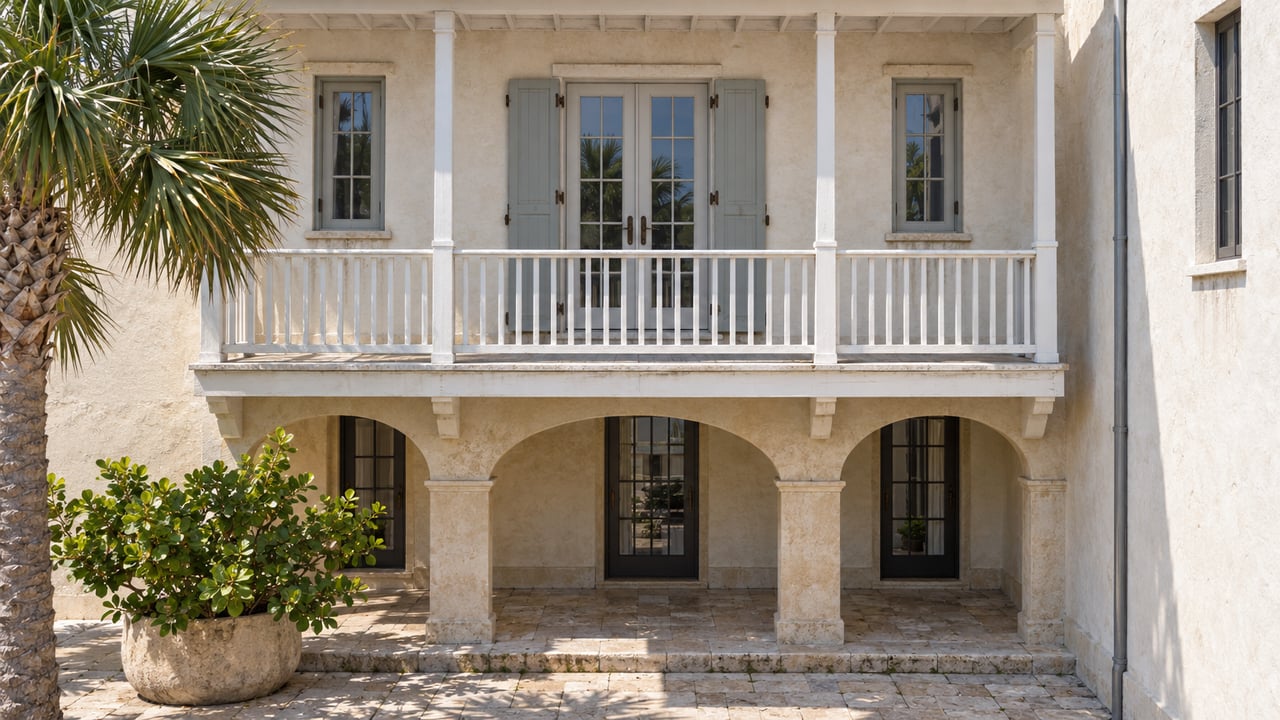
Two listings on the market this September make the same point in opposite directions. A six-bedroom house on Round Road runs 5,104 square feet and is priced near $8.1 million. A one-bedroom, one-bath condo on Main Street runs 839 square feet and is priced at $2.85 million. Run the math and the smaller unit wins by a wide margin: roughly $3,397 a square foot for the condo against about $1,587 a square foot for the house. A five-bedroom home on Turks Lane splits the difference at 3,228 square feet and just under $4 million, landing near $1,238 a square foot.
That is not a pricing mistake. It is the clearest number Rosemary Beach produces right now, and it tells a buyer something the median list price never will. Square footage stopped driving value here a while ago. What sets the price is which sliver of the town's 107 acres a home sits on, and what kind of ownership structure comes attached to it.
The Median Is an Average of Two Different Products
Ask several portals for Rosemary Beach's median price this year and you will get different answers, and the gap between them is itself a clue. Zillow put the typical home value near $2.72 million as of late February 2026. Realtor.com's median listing sat closer to $3.2 million around the same window. Redfin's neighborhood page recorded a $2.9 million median sale price in October 2025, up 13.4% year over year, with a median of $1,620 per square foot. Movoto's city-level data showed a $3,422,500 median sold price in April 2026 across 23 closings, and a separate August 2026 snapshot put the median list price at $2.74 million, or about $1,500 a square foot.
None of these sources are wrong. They are sampling different slices of a very small, very mixed inventory. Rosemary Beach rarely has more than a few dozen active listings at once, spread across a dense condo core around Barrett Square and Main Street and a wider ring of detached single-family homes toward the edges of town. When a month's closings lean toward condos, the price-per-square-foot average jumps. When they lean toward larger houses, it settles. A single median for a town this size and this segmented tells you less about where prices are headed than about which type of home happened to sell that month.
Days on market moves the same way. Redfin's October 2025 figures showed homes averaging 192 days on market that month, up sharply from 44 days the year before, on just five sales. Movoto's April 2026 figures showed a much faster 83-day average across 23 sales. Both are accurate. Both are also measuring a market thin enough that a handful of closings can swing the average by months.
What the Small Units Are Actually Selling
The premium on the Main Street condo is not really about the condo. It is about the address. Rosemary Beach was designed from the start, beginning in 1995 under the Rosemary Beach Land Company and the town plan from Andres Duany and Elizabeth Plater-Zyberk, so that no point in the community sits more than a five-minute walk from any other. The condos closest to the Town Center sit inside that radius by definition. A buyer on Main Street is paying for proximity to Barrett Square's shops and restaurants, the shortest boardwalk to the beach, and a fixed, small supply of units that will never expand because the land around them is already built.
A house on Round Road or Turks Lane offers more room, more privacy, and often a shorter walk to a different beach access point, but it is competing against other large single-family homes rather than against a scarce handful of Town Center units. Scarcity within a category, not overall size, is what the price-per-square-foot gap is measuring.
The Bill That Never Makes the Listing Photo
Here is the part that changes the math for anyone comparing a condo purchase against a single-family purchase at a similar price point. Current 2026 Property Owners Association fee disclosures for Rosemary Beach show detached single-family homes paying $1,592 per quarter, or $6,368 a year. Condominiums pay $5,144 per quarter, or $20,576 a year. That is a gap of roughly $14,200 annually between the two ownership structures, and it does not show up anywhere in the sale price. It shows up on the closing disclosure, and then every quarter after that for as long as you own the property.
Put the two numbers next to each other and the picture sharpens. The $2.85 million Main Street condo is not just carrying a higher price per square foot. It is carrying an ongoing cost roughly three times higher than a similarly priced single-family home, before insurance, property taxes, or maintenance enter the conversation.
What the Higher Condo Dues Actually Buy
That gap is not simply a markup. Rosemary Beach's POA dues fund common area maintenance, pool access, the fitness center, landscaping, security, and beach access management across the community, and condo buildings carry a larger share of shared structure and staffing than a detached house does. A condo owner's higher quarterly bill effectively pre-pays for building envelope upkeep, while a single-family owner has to fund exterior upkeep separately and irregularly.
That irregular funding is its own cost. Rosemary Beach's wood-frame construction, the cedar shingle and stucco exteriors that give the town its West Indies and Charleston-inspired look, needs full exterior repainting roughly every five to seven years, typically running $15,000 to $30,000 depending on the size of the home. Termite mitigation and wood rot remediation on eaves and decking are ongoing costs. Minor projects run $500 to $1,500 in architectural fees before a contractor is hired. Major renovations requiring engineered drawings can add $15,000 to $35,000 in design and compliance costs on top of construction.
The dues don't show up in the sale price. They show up every quarter after.
A single-family owner is essentially self-insuring against a five-to-seven-year lump sum. A condo owner is paying that cost in installments through a bill that is already three times higher. Neither structure is a better deal in the abstract. They are two different ways of paying for the same climate, and the right one depends on whether a buyer would rather budget for a known quarterly number or plan around a large, irregular one.
The Rental Math Behind the Dues
For anyone underwriting Rosemary Beach as an income property, the dues gap matters even more. According to BNB Calc, renting short term here requires written approval from the Rosemary Beach Property Owners Association in addition to Walton County's Short-Term Vacation Rental Certificate, and the POA maintains its own business tax receipt covering approved community rentals. That approval process applies to condos and single-family homes alike, so it is not a variable that favors one property type over the other.
The dues gap is. A single-family home carrying $6,368 a year in POA fees needs to clear a lower bar before rental income turns a profit than a condo carrying $20,576 a year in the same category. The condo's walkability may support a stronger nightly rate and steadier occupancy, particularly for buyers who feel that Rosemary Beach's brand and street-level European village feel outperform surrounding markets for guest demand. Whether that premium closes the $14,200 annual gap depends on the specific unit, its rental history, and its distance from the Town Center, not on a rule of thumb that applies across the board.
The Number Worth Asking For
If two Rosemary Beach listings show similar sticker prices, the sticker price is not where the comparison should end. Ask for the current POA dues schedule for each property, ask when the exterior was last repainted or when the most recent ARB filing was submitted, and price the ongoing carry cost with the same seriousness you would give the mortgage payment. In a town where the smallest unit on the market can cost more per square foot than the largest one, the number that actually decides whether a property is a good fit rarely sits at the top of the listing.
If you are weighing a Rosemary Beach condo against a single-family home and want the real dues history, rental performance, and ARB filing record pulled together before you write an offer, Live Love 30A can walk through the full carrying-cost picture with you before you compare a single square foot.
This article is general information, not legal, tax or financial advice. Consult a qualified professional about your situation.