Pull up Grayton Beach on two different listing sites in the same afternoon and you will get two answers that don't agree. Look at closed sales from the past twelve months and the median lands at $2.42 million, up 14 percent from the year before. Look instead at what's actively listed as of the first week of August 2026, and the average across the eighteen homes on the market jumps to $5.76 million.
Neither number is wrong. Both are pulling from the same roughly 100-acre stretch of coastline. That gap is the story, and it's worth understanding before you use either figure to rule Grayton Beach in or out.
Grayton Beach isn't one housing market wearing one price tag. It's several, sitting inside a single small footprint, and the average of all of them together doesn't describe what any specific buyer can actually get there.
Why the numbers split apart
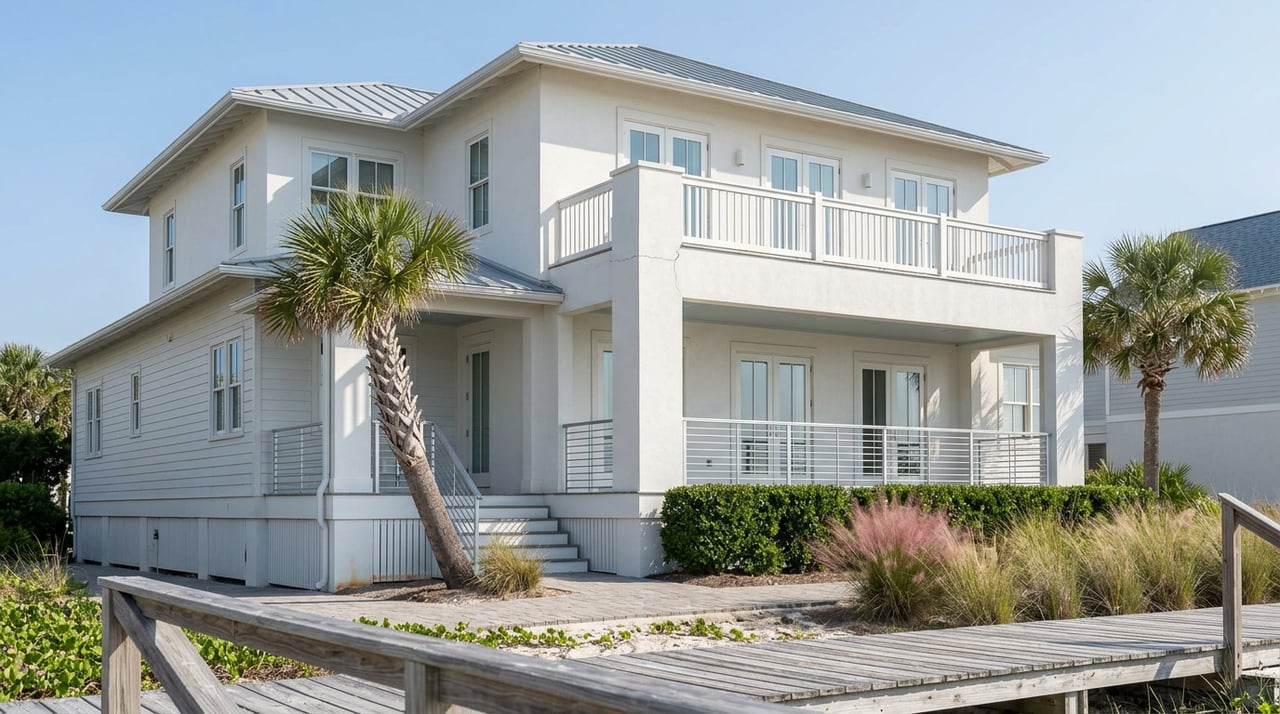
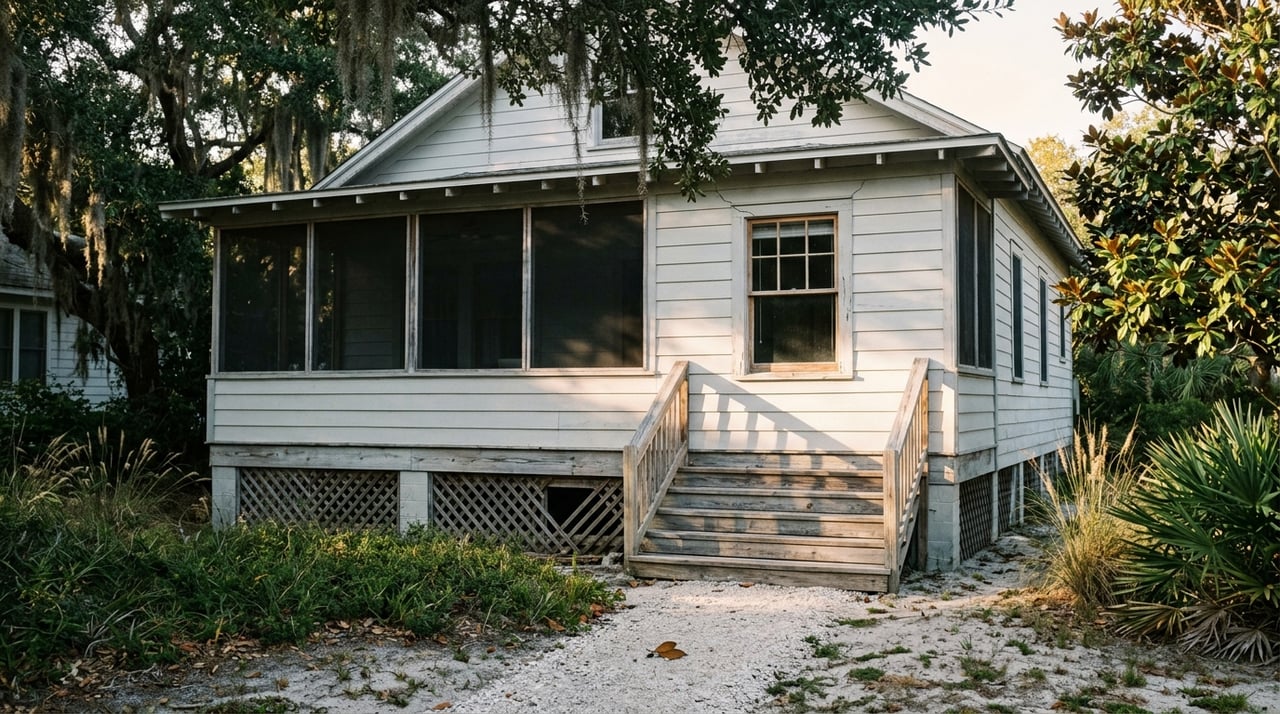
Grayton Beach was settled in 1885, long before anyone on this stretch of coast coined the phrase "New Urbanism" or drew up an architectural code. Communities built later, the master-planned towns with strict rules about rooflines, setbacks and paint colors, grew as a single designed product from day one. Grayton didn't have that option. It grew the way old beach towns grow: a scatter of cottages first, quiet infill for decades, then, over roughly the past fifteen years, a wave of teardown-and-rebuild that dropped contemporary Gulf-front estates a few lots away from bungalows nobody has touched since the 1970s.
The town holds around 200 homes across that 100-acre footprint. That's small enough that most people assume one number can describe it. It can't, because Grayton Beach never consolidated into one product the way its planned neighbors did. It stayed a patchwork, and the patchwork is exactly what the conflicting price data is picking up.
The map inside the map
If you're weighing Grayton Beach against Seagrove Beach, WaterColor or Blue Mountain Beach, it matters which corner of Grayton you're actually pricing.
- Village at Grayton Beach, a boutique subdivision of roughly 47 homes, and Grayton Cove, a pocket of about 14 homes where most neighbors live there full time, sit back from the beach village itself and consistently offer the more affordable way in. Village listings tend to run in the $1 million to $2 million range.
- The Preserve at Grayton Beach, a newer community adjacent to the historic core, isn't always directly on the sand but sits close to the dune lakes and the rest of the neighborhood's amenities. This is where a meaningful share of Grayton's sub-$1-million inventory shows up, stretching toward $2.5 million for larger lots.
- The Defuniak Street core, the walkable historic downtown, isn't a subdivision at all. Homes here are simply part of the original village, within walking distance of the beach, the shops, and the Red Bar, the old general store turned landmark gathering spot that still anchors the town's identity.
- Lakeplace and Grayton Landing sit at the premium end: gated, built directly on Western Lake, with private docks and community pools. Homes here rarely sit on the market long once they're priced correctly, and they routinely clear seven figures before you factor in lake or Gulf frontage.
- Gulf Trace, on the south side of 30A, is known for its unusually spacious lots compared to the rest of the neighborhood.
- Grayton Beach Villas, at the end of Sandy Lane, is worth naming on its own because it's the exception that proves the rule. It's the only condominium building in the entire neighborhood. If you're set on a low-maintenance unit rather than a standalone house, this is effectively your only option inside Grayton Beach's boundary.
Six named pockets, several different starting prices, one search result page that treats them as a single market.
What the skew actually costs you
This shows up in more than the headline price. Average square footage in current Grayton Beach listings runs somewhere around 3,300 to 3,400 square feet, well above the county average of roughly 2,350. That doesn't mean the typical Grayton Beach home is that large. It means the homes currently turning over skew toward the newer, bigger rebuilds concentrated in the premium pockets, because those are the ones changing hands at any given moment. The 1,200-square-foot cottage a family has owned in Grayton Cove for twenty years isn't on the market pulling that average back down, and it isn't going to show up in a portal's headline number either.
Days on market tells a similar story. Over the past twelve months of closed sales, Grayton Beach homes averaged 69 days on market, compared to a national average closer to 55. That single figure blends two very different realities. In Lakeplace or along the Defuniak Street core, a well-priced home with lake or Gulf access can move in weeks. In the Preserve or the Village, where turnover is slower and inventory sits longer, that average stretches out, which generally gives a patient buyer more room to negotiate.
Treat either number as a fact about "Grayton Beach" as a whole, and you're really taking an average of two different buying experiences and calling it one.
Comparing Grayton Beach to somewhere else
The useful habit isn't distrusting the data. It's asking which slice of the neighborhood a given figure describes before you set it next to a number from another town. A $2.42 million trailing median tells you almost nothing about whether a buyer looking for a two-bedroom cottage near the state park can find something in the Preserve for under a million. Both facts are true. They answer different questions.
That distinction gets more important as your comparison list grows longer. A blended median that mixes a gated lakefront enclave with a modest 1980s subdivision half a mile inland isn't a useless number, it just answers "what did Grayton Beach cost on average this year," not "what will this specific kind of home cost me here."
Quick answers
Are there still starter-level cottages in Grayton Beach, or has the whole town gone upmarket? Both exist side by side. The Preserve and the Village and Cove subdivisions still carry meaningfully lower entry points than the historic core or the lakefront gated communities, even as rebuilds keep pushing the top end higher.
Is Grayton Beach a fast-moving market? It depends on the pocket. Premium lakefront and walkable core listings can move quickly when priced right. Homes in the more residential subdivisions tend to sit longer, which usually works in a patient buyer's favor.
Can I buy a condo in Grayton Beach? There's exactly one option, Grayton Beach Villas at the end of Sandy Lane. Everything else in the neighborhood is a single-family home or townhouse.
Knowing which Grayton Beach a number is actually describing, and how each pocket stacks up against the rest of 30A, is the kind of read that doesn't come from a portal median. If you're weighing Grayton against Seagrove, WaterColor or another stretch of the coast, Live Love 30A can walk you through what each pocket, and each price, actually buys. Work With Us.